Why have Skin in the Game?
Warren Buffett is generally attributed with coining the phrase “skin in the game.” It essentially means key players have a financial stake in the outcome of an investment. That if you’re going to run a company or development project, you’re personally as at risk in some capacity as outside investors.
Warren Buffett is generally attributed with coining the phrase “skin in the game.” It essentially means key players have a financial stake in the outcome of an investment. That if you’re going to run a company or development project, you’re personally as at risk in some capacity as the outside investors.
For a development project, this “skin” is typically the equity you have on the line. Capital partners always want to see the percentage of total cost. How much are you personally willing to risk? How much do you believe in this project and your ability to execute it? Because they want to understand what you are willing to personally, put into the game.
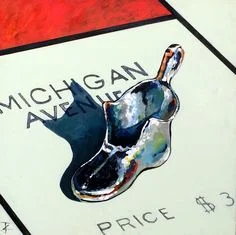
You can really tell people’s risk aversion in a game of Monopoly. This is one of the reasons I love this game.
In this board game, every player starts out on equal ground. Some are hungrier than others are and gobble up each property as fast as they can. Others will be strategic and aim for properties in proximity to one another. Some are very cautious and end on holding on to all their money. There is always that one player always strives to control the railroad and utilities. One who is most aggressive to build their portfolio and aim for the density associated with hotels.

You could play multiple rounds of Monopoly with the same players and they will have different results each time. That’s because you have at account for changing circumstances.
Strong players will be strong regardless, because they grit their teeth and find paths in the face of adversity and adapt to changing circumstance. They also usually lose most stylishly, always going out with a bang knowing they gave it their all and are confident with their decisions.
In development, these two things make or break you: Are you willing to put your money where your mouth is? Are you a strong player in the face of adversity?
-jen

What I intend to accomplish in the next 5 years
Over the last week, I’ve been asked multiple times if I plan to focus on developing within the region.
While I always keep my eyes peeled for a new project to tackle, I know one thing for sure: I'm fully committed and invested in the Great Lakes Bay Region. It’s not only where my family lives, but there are also lots of opportunities for growth.
Over the last week, I’ve been asked multiple times if I plan to focus on developing within the region.
While I always keep my eyes peeled for a new project to tackle, I know one thing for sure: I'm fully committed and invested in the Great Lakes Bay Region. It’s not only where my family lives, but there are also lots of opportunities for growth.
Developments that preserve the history, context, and sense of place that make each community unique and special are my priority. The businesses that want to begin a new venture in a property, residents that will call it home, and the surrounding business community are of utmost importance.
It’s all about how strong physical places support the lives who engage with them. There’s no shortage of ways to tweak and improve places.
Every time I have felt concerned about finding a project with the right density or scale needed to make financial sense, some property has found its way to my desk.
Each property has its own unique value proposition. It always keeps the work fresh. Even if the development process remains the same, taking two similar buildings with very different visions changes the end product.
The future is promising for our region. Here’s a peek at what I intend to accomplish over the next five years:
1. Bring another historic landmark back to life.

Yes, I know I have to finish The Legacy first. Am I a glutton for punishment? Maybe.
But there are some big projects still sitting out there in our community. Historic properties tell the story of a community's past and should be preserved -- and sometimes reinvented -- to fit the current market. So having the chance to take a 100-year-old property and give it new life for new generations to enjoy is really important.
A pivotal part of the take-it-or-leave-it equation is determining if a proposed project is worth the risk. Will the end product sustain itself in the long run?
Finding developments that maximize and elevate the community as well as make sense economically is always worth exploring,
I'm always thinking about how the dynamics are changing block to block.
How might bringing one building back pave the way for more developments or activate buildings down the road? How will each project affect the overall housing market? What companies would want to relocate or launch in the area?
It's all about the people involved. What company wants to put their brand on a space in a building? Who wants to live downtown?
Last month while having lunch at City Market, I overheard a mother shopping with her daughter run into a friend and started chatting. The mom was so proud her daughter who moved back after college, landed a great job at McLaren Bay Region, and is living in a townhouse at The Times Lofts.
These stories motivate me and make the hard projects worthwhile.
2. Create a model for missing middle housing options.

Right now in Bay City, we have too much housing for our population. But is it the kind of housing that meets our community’s needs now and into the future?
With changing demographics, including increasing numbers of households made up of young professionals and empty nesters, more housing options for a walkable urban living is critical to stopping capital flight and rejuvenating the community.
Stay tuned here for more thoughts on this important issue.
3. Heighten placemaking efforts by working with organizations, municipalities and community groups.

Placemaking is a multi-faceted approach to the planning, design, and management of public spaces. It is how streets, walkway paving, buildings, and open spaces shape the urban design structure and image as a unique place. It is how streetlights, plantings, signs, and public art complement this basic structure and contribute to the quality of the environment. By capitalizing on a local community's assets and potential, it’s possible to create public space that promotes people's health, happiness, and well-being.
By taking a holistic approach to real estate development, the overall form of these diverse elements organizes to convey a unified image, sense of vitality, and a comfortable setting for people to live, work, and play.
Spaces that encourage people to interact with their community improves the quality of life for everyone.
The next five years promise to be challenging, but exciting.
Let’s do this.
-jen

Contractors: Finding the Right Fit
Whether you’re redeveloping a five-story, historic structure or remodeling your kitchen, the secret to any successful project is the same: Building the right team.
But how do you pick the right builder or contractor to help bring your dream to life?
For me, it’s a combination of doing a lot of homework and then listening to your gut.
Developers orchestrate. We’re the jacks-of-all-trades and masters of none. That’s why building the right team is critical: You need to surround yourself with people who understand your vision and have the expertise to see it through.
Whether you’re redeveloping a five-story, historic structure or remodeling your kitchen, the secret to any successful project is the same: Building the right team.
But how do you pick the right builder or contractor to help bring your dream to life?
For me, it’s a combination of doing a lot of homework and then listening to your gut.

Transforming this property would be impossible without a shared vision among a capable team
Developers orchestrate. We’re the jacks-of-all-trades and masters of none. That’s why building the right team is critical: You need to surround yourself with people who understand your vision and have the expertise to see it through.
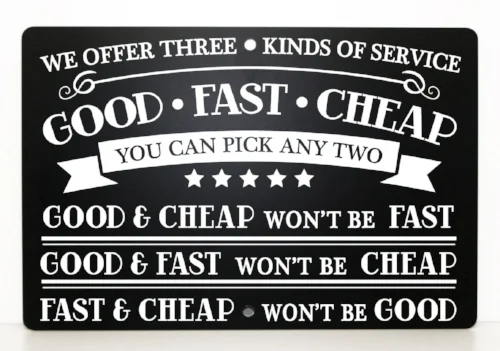
When it comes to construction:
1. It can be good
2. It can be fast
3. It can be cheap
But you can only have two.
Since I always demand high-quality work, I need to sacrifice speed or cost to get a job done the way I want it. With a tight deadline, we know we’re going to have to pay more to get the work done on time. But if I have the luxury of time, then I economize where I can while still meeting my high standards.
That’s why a strong, cohesive team is especially crucial.
Long before I even sit down with potential contractors, I’m out there finding out everything I can about their companies.
Let’s say I’m considering redeveloping a historic commercial property into a residential building. I need to get a lot of answers before I commit to hiring my team: How many similar projects have they done and have they completed the job to the high standards I expect. Does the firm have experience meeting Secretary for the Interior standards for historic tax credits?
I talk to colleagues who’ve worked with them in the past to hear the real scoop. Were you satisfied with the work performed? Did they finish the job on schedule? Or did they take payment and never finish their punch list?
And then I go into stalker mode.
I visit completed projects and look them over to make sure the work meets my expectations. My favorite trick is peeking into behind-the-scenes nooks and crannies like back stairwells to assess the contractor’s attention to detail. Anyone can make the front entrance look shiny and new, right? But what about a building’s underbelly? Are those areas handled with the same level of dedication as the front foyer? Those kinds of details are telling, I believe.
Then I suggest you sit down with several contractors and show them your dream. For a commercial project, you’ll likely be showing them plans you’ve started with an architect. For a home or remodel, use visuals from magazines or Pinterest to illustrate what you love and why you love it. Have your visuals edited down to a theme and specific end product you can visualize cohesively.

A portion of the idea book where I'm collecting inspiration for my future downtown office space
Do they really listen to your ideas and make helpful suggestions for making your ideas a reality? Or do they steamroll right over you? Do you feel a rapport? A synergy? Are these people you can trust?
If you feel uncomfortable or concerned in any way, they’re not the right folks for you.
But if you find someone who syncs with you and eventually does a great job, be sure to spread the good news: There’s nothing more valuable than first-hand recommendations.
Building is not for everyone. There are plenty of people who have a new home built and swear they’ll never go through that process again.
Me? I love it. Having a clear vision and then building a team to execute it is thrilling and frustrating and challenging all at the same time.
And I wouldn’t have it any other way.
-jen

Influence: You can be indispensable or likable
Last week I posted a statement on Facebook critical of elected officials. It was pretty mild: A simple request for them to show up and serve the community boards on which they serve.
The board members had just voted to increase their pay in the coming years and my reaction was: “Great! But if you want the pay, do the work.”
Last week I posted a statement on Facebook critical of elected officials. It was pretty mild: A simple request for them to show up and serve the community boards on which they serve.
The officials had just voted to increase their pay in the coming years and my reaction was: “Great! But if you want the pay, do the work.”
I received a couple of private messages afterward from people looking out for me saying: “Don’t say that … you’ll need their support in the future” or “Careful … they might take offense to that.”
Here’s the thing: I know I’m not going to be liked all the time or by everyone -- and that’s OK. Additionally, I believe it’s perfectly fine to disagree on issues and still like one another and work well together.
I don’t want to play the “chick card” here, but I do think as women we’re conditioned against rocking the boat. I’ve watched board chairs consider every idiotic idea presented by men, but tell women who raise relevant issues that they’re “confused.”
Critical thinking is important no matter who you are and I believe women should be respected as much as men for being critical.
The way I see it, you can be likable or you can be indispensable. This is especially true in board meetings and community development work. Each time you show up at a meeting your job is to move the ball as far down the field as you can in as short a time as possible. Otherwise, you’ve wasted an hour just networking and patting each another on the back.
We've all read the magazine articles suggesting a good leader waits to speak last at a meeting so she can gauge the room and collect the data around the table before opening her mouth.
That's not me.

Image via Giphy
I choose to be indispensable. I choose progress. I'm as straightforward as they come and I do not have a lot of time.
But straightforward doesn’t mean negative. People who know me understand that I’m really pretty positive. I’m the first one to get behind a great idea or suggestion – as long as you can prove it’s worth investigating further.
Choosing to be indispensable means working to create a culture that causes momentum. In meetings, I’ll often say the most against-the-grain-comment right off the bat in order to push the discussion threshold to a nearly uncomfortable level. Does that clear the deck for a more honest discussion and lead others to dial back to a stable middle ground? Probably. Will someone say I'm out of line? Maybe yes and maybe no.
But I'm not concerned about being right. And I'm not there to be liked. I'm there to maximize my time in an honest discussion and arrive at a resolution. I definitely don’t want anyone telling me after a meeting they’re still unsure about something that was voted on. Then I’m stuck holding the information or doing something about it. My goal is to discuss all the issues at the meeting so there’s no need to continue that discussion after we adjourn.
There’s not always a need for this approach. It’s great when meetings move along and make headway, where participants can relax and build social capital with one another. But dynamic meetings are a lot more energizing because participants leave feeling accomplished.
Motion to adjourn.
jen

Entrepreneur Profiles: Jenifer Acosta of Jenifer Acosta Development
People at ULI Michigan told me I should be in touch with you! What have you been up to with the Urban Land Institute?
When I started my development firm, I took advantage of several educational opportunities through the Urban Land Institute. I also went to the Fall Meeting in San Francisco in 2015 and the bi-annual Small Scale Developer Forum in Pittsburgh in 2016. I’m also in the 2017 ULI Michigan class of Larson Leadership out of Detroit.

$1.7M renovation of Bay City building planned for startup bringing 40+ jobs
BAY CITY, MI -- A $1.7 million renovation project is planned this fall for the facade and upper floors of a popular downtown Bay City restaurant, but the bigger news could be coming after the new year.
Dave Dittenber, owner of Old City Hall, 814 Saginaw St., has announced plans to make exterior facade improvements and completely renovate the restaurant's second and third floors into warehouse-style commercial office space.

How style and design of a project are determined
I believe buildings – especially historic ones – speak to those who listen for direction. Yep. I know this may sound crazy to some people. But I’ve found that spending time alone in a building’s hushed quiet helps me determine its future.
That’s because fighting a building is a recipe for disaster.
If you listen, you will hear it.
I believe buildings – especially historic ones – speak to those who listen for direction. Yep. I know this may sound crazy to some people, but I’ve found that spending time alone in a building’s hushed quiet helps me determine its future.
That’s because fighting a building is a recipe for disaster.
When embarking on a building redevelopment and determining its future style, my top priority is finding the baseline. In other words, settling on what time period and feel personify the building.
This summer, I signed on to a project and vetted three possible use scenarios for it. Regardless of these different directions, one thing remained constant: A vision for a high-end, warehouse-style space. Why? Because the building itself screams for it. If we were to build it out and 'white box' it, the value in its character would be lost.
Historic research plays a big role, too. Often your baseline is dictated by a building’s “period of significance.”
The Bay City Times building, for instance, underwent a complete overhaul in 1938-1939 that was inspired by Albert Kahn and very modern. When redeveloping it into The Times Lofts, we employed industrial features throughout the newspaper’s former pressroom spaces. If we’d bought gas-burning, outdoor lanterns or something else very 1920’s and placed it on the exterior, the State Historic Preservation Office would have insisted we remove them.
Other factors include protecting your stakeholders’ interests, the building’s relationship to the neighborhood, desired tenants and more. Working with great architects who share your vision is also pivotal.
From that baseline, you have the freedom to get creative.
I’m a hands-on developer and love design. So we don’t hire interior designers for our projects; we do it all ourselves. Once I determine the baseline and what's on trend and popular in design, I look for a way to add a twist or elevate the choices.
There are thousands of decisions on paint, tile, flooring, hardware, fixtures, kitchen cabinetry, bathroom sinks, lighting, vanities … the list goes on and on.
For The Legacy project, we knew that a lot of pre-war design featured white walls that let the woodwork speak for itself. Unfortunately, much of the former bank’s woodwork was painted in the course of its 127-year history. Painting it dark didn't seem feasible and stripping it all is impossible with our budget. We considered white walls with white trim, but that looked too sterile. Then the idea of gray trim came in and won us all over.
When it's all said and done, you hope that you heard right. You hope that you’re doing the building justice and honoring its memory. You hope that you’re creating something that will endure long after we’re gone.
-jen

Public Support Makes a Difference
Bringing a building back to life is not for the faint of heart.
Getting your ducks in a row can take months – or sometimes years -- depending upon the complexity of the project. Inevitably, there are challenges.
So a little encouragement goes a long way.
Bringing a building back to life is not for the faint of heart.
Getting your ducks in a row can take months – or sometimes years -- depending upon the complexity of the project. Inevitably, there are challenges.
So a little encouragement goes a long way.
I’m still a little surprised how often people stop me at the grocery or a restaurant to inquire about my projects. They’re curious about The Legacy’s (former) cheese-grater exterior, or our plans for the bank vault, or which restaurant will be showcased on the ground level.
I’ll hear from The Times Lofts’ tenants who tell me how much they love their new home. Or people who wonder about the next project I’ve got up my sleeve.
It makes a difference.
Because every “thank you” or “I drove an extra block just to see what’s new at your building” shows just how much our community values these projects.
You don’t have to be a developer to make a difference. Here are four ways to show you love your community and want to see it thrive:
1. TELL THE POWERS THAT BE -- Let’s face it: We’re all much more likely to share our opinions if we’re opposed to something rather than in favor of it. I’m guilty of it, too. I think it’s human nature, unfortunately.
But keyboard warriors who spout off on social media spreading negativity and misinformation aren’t part of the solution.
If something bothers you or gets under your skin, please put in a call, send an email, or attend a public meeting. I think you'll be pleasantly surprised at the help you’ll receive. Then once you’ve gathered the facts, feel free to share your opinion.
But if you’re excited about a potential development in your community, it’s important to speak up, too. Take the time to reach out to your local, state or federal elected officials and voice your support loud and clear.
It’s only if we constructively voice our opinions that we help shape the communities we love.
2. WHERE DO WE SIGN UP? -- One of the biggest ways to support communities and development is just getting involved. Volunteering on boards for the city, your neighborhood business district, serving the public in an elected capacity, at schools, churches, groups, organizations and special events is a great way to show you care and improves the quality of life for everyone.
3. SPREAD THE WORD -- A great way to advocate for your town is by talking it up. Go ahead and let out-of-towners know how far we’ve come – and what great treasures they’ll discover when they visit. Post positive reviews of your favorite businesses. Weave together a fun itinerary on TripAdvisor and share it.
Build up your community, don’t cut it down. Erase all those negative monikers from your vocabulary. It doesn’t matter if you’re only joking; you never know who’s listening.
4. SMILE – Being warm and welcoming makes a huge impact and builds our reputation as a great community. Out-of-town visitors will notice how friendly and hospitable we are and people in town on business are more likely to return. That friendliness makes a difference with our neighbors, too, because it strengthens our social bonds.
I believe our community’s positive character makes fighting for the character of a building worthwhile. Sometimes the work is grueling and the red tape stretches out for miles and miles.
But I love it. Nothing else challenges me like this work and, at the same time, makes me feel fulfilled and grateful. I’ve learned to celebrate the victories when they come.
And to appreciate a kind word or two along the way.
-jen